Other
Records tagged with Type of Memorial: Other
Witch Lake on the coast at St Andrews
Submitted by Margaret Fergus... on 30 October 2012 - 11:40pm
Revised: 12 January 2022 - 6:48pm — Margaret Fergus...
Dedicated to:
Location:
A tidal pool on the shore, east of the Aquarium, adjacent to The Scores near The Step (lake at NGR NO 5098 1700)
St Andrews
See map: Google Maps
Images:

Additional information:
In the 16th and 17th centuries, women who were suspected of being witches were thrown into the Witch Lake, a tidal pool on the coast at St Andrews. If they drowned they were innocent. If they floated it was evidence of their involvement in alleged witchcraft and they would be dragged out of the water and taken to be burnt at the stake on nearby Witch Hill.
Kate McNiven's Crag
Submitted by Elizabeth Ritchie on 26 October 2012 - 2:02pm
Dedicated to:
Inscription:
none
Material:
Crag on the side of the Knock hill, Crieff
Location:
Monzie, Crieff
Monzie
See map: Google Maps
Witches Maze at Tullibole Castle
Submitted by Elizabeth Ritchie on 26 October 2012 - 1:31pm
Revised: 14 November 2012 - 10:28am — admin
Inscription:
[The finished memorial is a circle 33m (100ft) wide and consists of 2,000 beech trees. At the centre of the maze is a one and a half ton elaborate sandstone pillar, with the names of the victims etched on it.]
Erected by:
Lord Moncrieff
Designed by:
Sandstone pillar designed by Gillian Forbes
Date:
Planted in 2003-2012
Material:
Maze of beech hedges with a sandstone pillar in the middle
Location:
Tullibole Castle
Crook of Devon, KY13 0QN
See map: Google Maps
Additional information:
The maze is 100 feet in diameter, designed "also be a attack on the ignorant and superstitious beliefs of the past as well as those in modern day society".
Extracts from the BBC report on the completion of the memorial: "A memorial to 11 people executed for witchcraft in Kinross has been unveiled at the home of those who condemned them. The Witches Maze at Tullibole Castle commemorates the victims of the Crook of Devon witch trials in 1662. The castle was once home to William Halliday and his son John who held court over the 'covens' in the village.
Lord Moncrieff, who now owns Tullibole, commissioned the maze as there is no memorial in Crook of Devon. In 1662 the court sat five times and resulted in the death of 11 suspected witches. Those who survived the trials were taken to a small mound near the current village hall and strangled by the common hangman and their bodies thrown on a fire. Lord Moncreiff commenced on the maze in 2003 ... Lord Moncreiff said: "I dislike public art that has nothing to say and commissioned Gillian [Forbes]because I believe she understands the sensitivity of the task. It is my hope that the memorial will also question our understanding of the past and issues of blame and judgement in modern day society."
http://www.bbc.co.uk/news/uk-scotland-tayside-central-20085045
More information about the memorial is available on the Tullibole Castle's Witches Maze website: http://www.tulbol.demon.co.uk/witches_maze.html
The Angel Font, St Andrew's Cathedral, Inverness
Submitted by Alison McCall on 23 October 2012 - 9:58pm
Dedicated to:
Inscription:
To the Glory of God
The Font
Was placed in this Cathedral by
Col and Mrs Learmonth
of Dean, near Edinburgh
1871.
Erected by:
Col and Mrs Learmonth
Date:
1871
Material:
Marble
Location:
St Andrew's Cathedral
15 Ardross Street
Inverness, IV3 5NS
See map: Google Maps
Images:


Additional information:
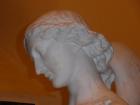
The Angel Font is a copy of a font in Copenhagen, but with the face of Charlotte Learmonth.
Dun Deardail, Glen Nevis
Submitted by admin on 23 October 2012 - 3:50pm
Dedicated to:
Inscription:
[none]
Date:
Unknown (see additional information)
Material:
Vitrified stone
Location:
Dun Deardail
See map: Google Maps
Additional information:
This vitrified fort, named for the legendary Deirdre of the Sorrows, may be date from as early as 1000BC, and may have been occupied and possibly rebuilt at several different times.
The site has also been known as Dundbhairdghall, Dun Dearduil and Dun Dearg Suil (Hill of the Red Eyes
Relief Stone Sculptured Carving in Memory of Queen Victoria
Submitted by Margaret Fergus... on 22 October 2012 - 1:34pm
Dedicated to:
Inscription:
VICTORIA REGINA
1857
Date:
1857
Material:
stone
Location:
On the wall within the quadrangle of the Chambers Institution, opposite the War Memorial
High Street
Peebles, EH45 8AG
See map: Google Maps
Images:

Princess Royal Basin, Macduff Harbour.
Submitted by Alison McCall on 8 October 2012 - 10:59pm
Revised: 8 October 2012 - 11:03pm — Alison McCall
Dedicated to:
Inscription:
None.
Erected by:
Macduff Town Council
Date:
1921
Location:
Macduff Harbour
Macduff, AB44 1TX
See map: Google Maps
Additional information:
The Scottish Screen Archive has footage of the Princess Royal opening the harbour in 1921.
Fountain commemorating Jeannie Bodie
Submitted by Alison McCall on 8 October 2012 - 9:35pm
Revised: 31 October 2012 - 1:54pm — admin
Dedicated to:
Inscription:
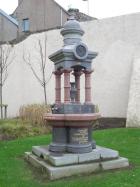
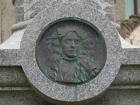
Presented to the Burgh of Macduff by Dr and Mrs Walford Bodie in memory of their daughter Jeannie.
Erected by:
Dr and Mrs Walford Bodie
Date:
1910
Material:
Granite
Location:
Maritime garden
Crook o' Ness Street
Macduff , AB44 1QS
See map: Google Maps
Images:
Additional information:
The fountain has moved several times - original erected in Macduff Harbour, cue to harbour improvements the fountain was moved c.1938 to a second location opposite the Market Arms. In 1965 it was moved to a third location, between 65 and 69 Duff Street, before moving to its current location in ~2009.
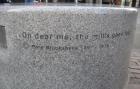
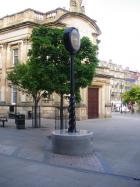
Clock commemorating Mary Brooksbank
Submitted by Alison McCall on 28 September 2012 - 7:32am
Revised: 29 September 2012 - 11:28am — Alison McCall
Dedicated to:
Inscription:
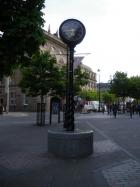
There is a brass plaque on the base, covered by a perspex panel. The perspex has become scratched/cloudy making it difficult to read the inscription.
Inscribed in the granite base is the first verse of Brooksbank's Jute Mill Song: Oh dear me, the mills gaen fest, The puir wee shifters canna get a rest, Shiftin' bobbins, coorse and fine; They fairly mak' ye work for your ten and nine.
Material:
Granite base. Iron support.
Location:
High Street, Dundee.
High Street
Dundee, DD1 1SD
See map: Google Maps
Images:
Dun Deardail, Inverfarigaig
Submitted by Alison McCall on 25 September 2012 - 10:32am
Revised: 23 October 2012 - 3:30pm — admin
Dedicated to:
Inscription:
None
Date:
c 700BC
Material:
stone
Location:
Dun Deardail
Inverfarigaig
See map: Google Maps
Additional information:
Dun Deardail (or Dun Dearduil) is an Iron Age hill fort: Legend tells that Deirdre and her lover, Naoise, took refuge in this fort.
(There is another Dun Deardail in Glen Nevis, about which the same claim is made)


